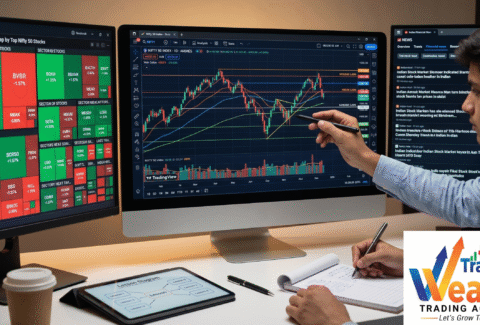
Why Borivali’s IT Crowd Is Leaving YouTube for a Physical Classroom to Learn Trading

Why Borivali’s IT Crowd Is Leaving YouTube for a Physical Classroom to Learn Trading
 Amar Mandekar
 Something’s shifting quietly in Borivali. Walk into an evening batch at a trading academy here and you’ll notice the same thing again and again. Laptop bags with company badges still clipped on. ID cards from IT parks in Malad and Goregaon. People who clearly spent their whole day on a screen, choosing to spend their evening on another one, except this time in a room, with a whiteboard, and someone who can be interrupted mid sentence.
That last part is the whole story, really. It’s not that YouTube stopped being free. It’s that free stopped being enough.
The YouTube Trap: Why Free Content Wasn’t Working
Most IT professionals didn’t start with a trading academy. They started the way everyone does now: a few videos on candlestick patterns, a Telegram channel that promised “sure shot calls,” maybe a paid course bought during a festive sale. And for a while, it feels like progress. You learn the vocabulary. RSI, support and resistance, breakout, stop loss. The words start to sound familiar.
Then you place your first few trades and none of it holds up. The video made a clean setup look inevitable. Your actual chart looks nothing like it. You pause the video, rewind, watch again, and the video, obviously, says nothing back.
This is the specific frustration that keeps showing up in conversations with IT professionals switching to offline classes. It’s not that the content was wrong. It’s that there was no one to ask why it didn’t work for them. A recorded video can teach you a pattern. It can’t watch you misread one and correct you before you’ve put real money behind it.
Why an Engineer’s Mind Doesn’t Settle for a Comment Section
There’s a particular kind of learner that IT and engineering backgrounds tend to produce, people trained to debug, not guess. If code doesn’t run, you don’t rewatch a tutorial hoping it fixes itself. You find someone who can look at your actual error and explain what’s different about your case.
Trading rewards that same instinct, but online learning rarely supports it. A comment under a YouTube video asking “why did this trade fail for me?” either goes unanswered or gets buried under a hundred others. For someone used to structured problem solving (write code, run it, get immediate feedback, adjust), that silence is exactly what pushes them toward a room where a trainer can look at their screen and say, plainly, here’s what you missed.
It’s part of why Amar Mandekar’s own background resonates with this specific crowd. Before Trade4Wealth, he spent years teaching in engineering colleges, which shows up in how the classes are actually run. Concepts aren’t just demonstrated once. They’re broken down the way a technical concept gets broken down for someone who needs to understand the mechanism, not just memorize the outcome.
What a Physical Classroom Gives You That a Playlist Can’t
A few things come up consistently when IT professionals talk about why the switch was worth it:
- Live market sessions, not recorded ones. Watching Nifty move in real time, with someone narrating what’s actually happening and why, teaches pattern recognition faster than any static video ever could.
- Correction before the mistake compounds. In a classroom, a trainer catches a flawed reading of a chart in the moment. Online, you find out three trades later, when it’s already cost you money.
- A peer group that’s actually accountable. Sitting next to five or six other working professionals doing the same evening batch creates a kind of quiet pressure to actually practice between sessions, something a solo YouTube habit rarely produces.
- Structured progression instead of algorithm driven content. YouTube shows you whatever performs well, not necessarily what you need next. A course like Trade4Wealth’s investment programs for working professionals is sequenced deliberately: basics, risk management, strategy, then live application.
Who’s Actually Filling These Evening Batches
It isn’t just IT professionals, but they make up a large share of the shift, and for practical reasons as much as psychological ones. Borivali sits close enough to the western suburb IT corridor (Malad, Goregaon, Andheri) that an evening class after work is realistic rather than aspirational. Batches timed around a 9 to 6 job, weekend intensives, and a location that doesn’t demand a long commute home afterward all matter more than people expect when they’re choosing between “watch it later” and “show up tonight.”
There’s also a subtler reason. Many IT professionals already spend a large chunk of their income and career growth tied to markets indirectly, through ESOPs, mutual funds, or simply watching their own company’s stock move. Understanding the mechanics stops feeling optional once you realize how much of your own financial life already depends on it.
What to Check Before You Make the Switch Yourself
If you’re an IT professional in Borivali currently learning from scattered online sources and weighing whether an offline class is worth it, a few honest questions are worth asking first:
- Does the trainer trade actively, or only teach? Ask directly. Experience that’s current, not historical, is what lets a trainer catch your mistakes in real time.
- Are sessions during live market hours, or only theory based? Real time sessions are where the actual learning compounds.
- Is the batch timing realistic for your work schedule? A course that assumes you can attend at 3 p.m. on a Tuesday isn’t built for someone with a full time job.
- What happens after the course ends? Ongoing mentorship or community access matters more than most people budget for upfront. Markets don’t stop teaching lessons the day your course does.
You’ll find these answered in more detail on Trade4Wealth’s financial market training academy page, including how the format is structured around exactly this kind of working professional schedule.
Frequently Asked Questions
Why are IT professionals switching from YouTube to offline trading classes in Borivali?
Mainly because free content can’t correct mistakes in real time. Offline classes offer live market sessions, direct feedback from an active trader, and a structured curriculum, things a recorded video or scattered playlist can’t replicate.
Are offline stock market classes in Borivali suitable for working professionals?
Yes. Most academies, including Trade4Wealth, run evening and weekend batches specifically designed around a full time work schedule, so you don’t need to take time off to attend.
Is prior trading or finance knowledge required to join?
No. Courses are typically structured to start from the basics (market fundamentals, risk management) before moving into strategy and live trading practice, so complete beginners can join alongside those with some exposure.
How is an offline class different from a paid online course?
The core difference is real time correction. An online course delivers the same content to everyone regardless of how they’re applying it. An offline class lets a trainer see your specific trades, your specific mistakes, and adjust the teaching to you.
How long does it typically take to become confident enough to trade independently?
Most learners see a real shift in confidence within a few months of consistent, structured learning, though this depends heavily on how much live practice and mentorship the course includes, not just its duration.
The Real Reason Behind the Shift
It isn’t that Borivali’s IT professionals gave up on learning from screens because screens are bad. It’s that they’d already spent a career learning that real problems get solved by someone who can look at your specific situation and tell you what’s actually wrong, not by hoping the next video in the playlist happens to cover it.
If that’s where you are right now, three YouTube playlists deep and still guessing, it might be worth sitting in on an actual class before committing to another course you’ll watch alone. Explore Trade4Wealth’s courses or check the FAQs to see if the format fits your schedule.