
Jensen Huang Returns as NVIDIA CEO: What Happened in 11 Days?
 admin
Last Updated: November 24, 2026
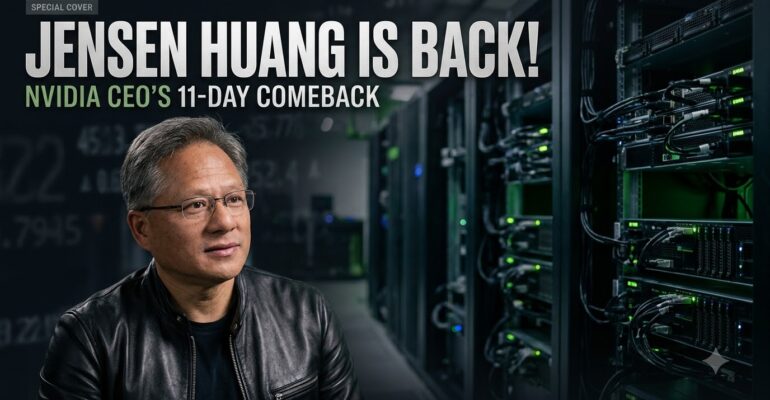
Jensen Huang Returns as NVIDIA CEO! In an extraordinary leadership reversal, NVIDIA’s board reinstated its co-founder as President and Chief Executive Officer on November 23, 2026, just 11 days after announcing his resignation. This remarkable turnaround showcases the significance of Jensen Huang Returns as NVIDIA CEO in the tech industry.
The significance of Jensen Huang Returns as NVIDIA CEO cannot be overstated; it marks a pivotal moment for the company and the industry at large. Jensen Huang Returns as NVIDIA CEO has invigorated the stock market and raised hopes for AI advancements.
Investors and technology experts alike are keenly observing the implications of Jensen Huang Returns as NVIDIA CEO for the company’s future. Jensen Huang Returns as NVIDIA CEO may signal renewed focus on AI and innovation strategies that leverage his experience.
This reinstatement is especially significant as Jensen Huang Returns as NVIDIA CEO during a time when AI technology is rapidly evolving. Analysts suggest that Jensen Huang Returns as NVIDIA CEO could lead to a stronger competitive edge in the AI market.
The announcement attracted significant attention across global financial markets. NVIDIA shares closed 31.5% higher on November 23, according to Reuters. The development also brought renewed attention to Jensen Huang’s leadership and NVIDIA’s increasingly important position in the artificial intelligence industry.
We will also explore how Jensen Huang Returns as NVIDIA CEO impacts the company’s growth trajectory and investor confidence in the technology sector.
The news of Jensen Huang Returns as NVIDIA CEO sent waves through the technology sector, emphasizing the company’s crucial role in AI advancements.
But this comeback is about more than one executive returning to his position. It also highlights how closely NVIDIA’s future, investor confidence and the global AI infrastructure industry are connected to its leadership and technology strategy.
In this article, we will understand what happened, why Jensen Huang is so important to NVIDIA, how the company transformed from a gaming graphics business into a major AI infrastructure provider, and what its latest financial numbers reveal.
Jensen Huang’s NVIDIA CEO Comeback: What Happened?
The Significance of Jensen Huang Returns as NVIDIA CEO
The leadership developments at NVIDIA unfolded over a short period in November 2026. What initially appeared to be a major leadership change eventually turned into an unexpected return.
Here is a timeline of the important events:
The excitement surrounding Jensen Huang Returns as NVIDIA CEO is palpable, as investors are eager to see how his vision shapes the company moving forward.
| Date | Major Development |
|---|---|
| November 12, 2026 | NVIDIA announced that Jensen Huang had resigned as President, CEO and board member. CFO Colette Kress was appointed Interim CEO. |
| November 17, 2026 | NVIDIA reported its Q3 FY2027 financial results. The board also indicated that it would not reinstate Huang following his resignation. |
| November 23, 2026 | NVIDIA’s board unanimously reversed its earlier position and reinstated Jensen Huang as President and CEO. |
The most surprising part was the board’s decision to reverse its earlier position. After initially accepting Huang’s resignation and considering a permanent replacement, the board ultimately decided that he should return to lead the company.
The strong public reaction to Jensen Huang Returns as NVIDIA CEO highlights the high expectations stakeholders have for his leadership.
In its November 23 announcement, NVIDIA said that the board had held discussions and meetings with Huang before reaching its decision. The board also stated that it had received input from senior levels of the US government and was confident that his reinstatement posed no national security risk.
Harvey C. Jones continued as the board’s chairperson, while Colette Kress returned to her responsibilities as NVIDIA’s Chief Financial Officer after serving as Interim CEO.
It is important to note that the public announcements and subsequent news reports described a complicated leadership situation involving personal conduct controversy and questions surrounding export-control compliance. Investigations and regulatory scrutiny were still ongoing. The reinstatement itself does not mean that every outstanding question has been resolved.
Why Did Jensen Huang’s Return Attract So Much Attention?
Jensen Huang is not an ordinary corporate executive. He is one of the co-founders of NVIDIA and has played a central role in shaping the company’s technology strategy for more than three decades.
His departure created uncertainty among investors, technology companies and businesses that depend on NVIDIA’s computing infrastructure.
According to Reuters, US President Donald Trump and prominent technology leaders, including Elon Musk, supported Huang’s return. A public petition calling for his reinstatement also collected more than 180,000 signatures.
Trump publicly expressed support for Huang, and NVIDIA’s board confirmed that it had received input from senior US government officials during its decision-making process.
This level of attention reflects NVIDIA’s position in the global technology ecosystem. Its products are not limited to personal computers or gaming. They are also important components of the infrastructure used to develop, train and operate modern AI systems.
How Did NVIDIA Transform From a Gaming Company Into an AI Giant?
To understand Jensen Huang’s importance, it is necessary to look at NVIDIA’s history.
NVIDIA was founded on April 5, 1993, by Jensen Huang, Chris Malachowsky and Curtis Priem. The company’s original vision was to develop advanced graphics technology for gaming and multimedia applications.
1. The Early Years: Focus on Graphics and Gaming
NVIDIA initially built its reputation by developing graphics processing technology for computers and gaming systems.
In 1999, the company introduced the GPU, or Graphics Processing Unit, which helped transform computer graphics and accelerated the development of modern gaming.
Its GeForce product family subsequently became an important part of the gaming graphics market.
However, the real opportunity was much larger than gaming alone.
2. The CUDA Breakthrough: Expanding Beyond Gaming
One of NVIDIA’s most important strategic decisions was investing in GPU computing beyond traditional graphics applications.
In 2006, NVIDIA introduced CUDA, a parallel computing platform and programming model that allowed developers and researchers to use GPU processing power for a wider range of computational tasks.
This opened opportunities in scientific research, engineering, data processing and artificial intelligence.
Instead of limiting GPUs to rendering graphics, CUDA helped developers use them for complex calculations that could benefit from parallel processing.
This software ecosystem became an important competitive advantage for NVIDIA as demand for accelerated computing increased.
3. Artificial Intelligence: The Beginning of a New Opportunity
A major turning point came in 2012, when the AlexNet deep-learning breakthrough demonstrated the potential of GPU acceleration in artificial intelligence.
GPUs could process large amounts of data in parallel, making them particularly useful for training computationally intensive AI models.
As artificial intelligence research progressed, demand increased for powerful computing hardware and software capable of handling increasingly complex models.
NVIDIA was already building technology for this opportunity through its GPUs, CUDA software ecosystem and accelerated computing platforms.
Over time, the company expanded its business to serve cloud computing companies, enterprise customers, AI developers and large data center operators.
This long-term technology investment helped NVIDIA become one of the most influential companies in the AI infrastructure industry.
NVIDIA’s Latest Financial Results: Why Is Its Data Center Business So Important?
One of the strongest indicators of NVIDIA’s transformation is its revenue distribution.
According to NVIDIA’s third-quarter fiscal 2027 financial results, announced on November 17, 2026, the company reported total revenue of $115.8 billion for the quarter ended October 25, 2026.
Out of this amount, $107.6 billion came from its Data Center business.
| Financial Metric | Q3 FY2027 |
|---|---|
| Total Revenue | $115.8 Billion |
| Data Center Revenue | $107.6 Billion |
| Total Revenue Growth (Year-on-Year) | 103% |
| Data Center Revenue Growth (Year-on-Year) | 110% |
| Data Center Share of Total Revenue | Approximately 92.9% |
What does this mean?
For every $100 of revenue generated by NVIDIA during this quarter, approximately $92.90 came from its Data Center business.
This percentage is calculated by dividing Data Center revenue of $107.6 billion by total revenue of $115.8 billion.
It clearly shows how much NVIDIA’s business has evolved. Although the company initially became famous for gaming graphics, its financial performance is now heavily driven by computing infrastructure required for artificial intelligence and data centers.
What Does NVIDIA’s Data Center Business Actually Do?
Many people associate NVIDIA only with graphics cards. However, its Data Center business covers a much broader range of technology.
Modern AI applications require enormous computing resources. Training large AI models, operating generative AI applications and handling millions of AI requests require high-performance computing infrastructure.
NVIDIA provides several components required to build this infrastructure.
1. AI GPUs
NVIDIA develops high-performance GPUs designed for AI model training, inference and other computationally intensive workloads.
2. Networking Technology
Large AI systems need high-speed communication between GPUs, servers and computing systems. NVIDIA provides networking technologies that help connect these components efficiently.
3. AI Software and Computing Platforms
Its software ecosystem, including CUDA, helps developers build and operate applications that use GPU acceleration.
4. Complete Data Center Systems
NVIDIA also develops integrated computing platforms that combine processors, networking and other components to support large-scale AI infrastructure.
As more companies invest in artificial intelligence, cloud services and enterprise computing, demand for these technologies can become an important growth driver for NVIDIA.
What Was the Impact of Jensen Huang’s Return on NVIDIA Stock?
The leadership news had a significant impact on NVIDIA shares.
On November 23, 2026, following the announcement of Jensen Huang’s reinstatement, NVIDIA shares rallied sharply. Reuters reported that the stock closed 31.5% higher on the day.
The rally also helped lift broader technology and AI-related stocks, reflecting the importance of NVIDIA to the wider AI investment ecosystem.
Why did investors react so strongly?
There are several possible reasons:
- Leadership confidence: Investors may have viewed the return of NVIDIA’s co-founder as a positive development for the company’s long-term technology strategy.
- Reduced leadership uncertainty: The unexpected departure had created concerns about the company’s future leadership. His reinstatement removed some of that immediate uncertainty.
- Importance to the AI industry: NVIDIA supplies key technology used by major cloud providers and AI companies around the world.
- Market sentiment: The board’s reversal and the strong public support for Huang may have contributed to a rapid improvement in investor sentiment.
However, a sharp increase in share price does not automatically mean that the stock will continue rising. Investors still need to evaluate company earnings, future growth expectations, valuation, competition and regulatory risks.
What Should Investors Watch After Jensen Huang’s Return?
Jensen Huang’s return is an important development, but investors should look beyond the headline and understand the factors that may influence NVIDIA’s future performance.
1. Continued Growth in AI Infrastructure
Demand for AI computing capacity remains an important business driver. Investors should monitor whether cloud providers, technology companies and enterprises continue increasing their investments in AI infrastructure.
2. NVIDIA’s Data Center Revenue
Data Center revenue has become a major part of NVIDIA’s business. Future quarterly results will help investors understand whether the company can maintain its current growth momentum.
3. Competition in the AI Chip Industry
NVIDIA operates in a highly competitive industry. Other semiconductor companies and major technology companies are developing competing AI processors and computing solutions.
Maintaining its technology and software ecosystem advantage will remain important.
4. US-China Trade and Export Restrictions
Restrictions on advanced semiconductor exports to China remain an important factor for NVIDIA’s international business.
Regulatory decisions can influence which products the company can sell in particular markets and may affect future revenue opportunities.
5. Leadership and Corporate Governance
The circumstances surrounding Huang’s resignation and reinstatement have also raised questions about corporate governance and regulatory oversight.
Investors should monitor the outcome of ongoing investigations and the company’s approach to compliance and risk management.
What Is NVIDIA’s Revenue Outlook?
Along with its third-quarter FY2027 results, NVIDIA provided guidance for its fourth fiscal quarter.
The company expected fourth-quarter revenue of approximately $130 billion, plus or minus 3%.
One important detail in its guidance was that NVIDIA was not assuming any Data Center compute revenue from China.
This outlook highlights the scale of demand NVIDIA expects from its business, while also showing why investors need to consider geopolitical and export-control restrictions when evaluating the company’s future.
It is important to remember that company guidance represents management’s expectations and not guaranteed future revenue.
Conclusion: Jensen Huang’s Return Is More Than Just a CEO Comeback
Jensen Huang’s return as NVIDIA CEO after 11 days is one of the most significant corporate leadership developments of November 2026.
His contribution to NVIDIA goes beyond building a successful graphics card business. The company’s long-term investments in GPUs, CUDA and accelerated computing helped position it to benefit from the global growth of artificial intelligence.
The latest quarterly financial results highlight this transformation. With $107.6 billion in Data Center revenue out of $115.8 billion in total revenue, NVIDIA’s business is now deeply connected to global AI infrastructure demand.
In summary, the impact of Jensen Huang Returns as NVIDIA CEO extends beyond immediate market reactions; it sets the stage for future advancements in AI and technology development.
His reinstatement has restored an important leadership figure at the company, but NVIDIA still faces competition, geopolitical challenges, regulatory scrutiny and the need to sustain its financial performance.
For investors, the bigger lesson is that understanding a company’s technology, business model, leadership and financial results is just as important as following its stock price.
Knowledge of the business behind a stock can help investors understand why the market reacts to major developments.
Frequently Asked Questions (FAQs)
1. Is Jensen Huang back as NVIDIA CEO?
Yes. NVIDIA officially announced on November 23, 2026, that its board had unanimously reinstated Jensen Huang as President and CEO, effective immediately.
2. When did Jensen Huang leave NVIDIA as CEO?
NVIDIA announced Jensen Huang’s resignation on November 12, 2026. CFO Colette Kress was appointed Interim CEO following his departure.
3. How many days did it take for Jensen Huang to return as NVIDIA CEO?
Jensen Huang returned on November 23, 2026, 11 calendar days after NVIDIA announced his resignation on November 12.
4. Why did NVIDIA reinstate Jensen Huang?
NVIDIA stated that its board unanimously decided to reinstate Huang after discussions and meetings with him. The company also said that the board received input from senior US government officials and was confident that his reinstatement posed no national security risk.
5. How much revenue did NVIDIA generate from its Data Center business?
NVIDIA reported $107.6 billion in Data Center revenue for Q3 FY2027, compared with total company revenue of $115.8 billion.
6. What percentage of NVIDIA’s revenue came from Data Centers?
Approximately 92.9% of NVIDIA’s Q3 FY2027 revenue came from its Data Center business, based on the company’s reported quarterly figures.
7. Why is Jensen Huang important to NVIDIA?
Jensen Huang co-founded NVIDIA in 1993 and helped guide its evolution from a graphics-focused technology company into a major provider of GPU computing, AI processors, software platforms and data center infrastructure.
8. Did NVIDIA stock rise after Jensen Huang returned?
Yes. According to Reuters, NVIDIA shares closed 31.5% higher on November 23, 2026, following the announcement of his reinstatement.
9. Is NVIDIA only a gaming graphics card company?
No. NVIDIA continues to operate in gaming, but its business also includes data center computing, artificial intelligence, networking, professional visualization, automotive technology and accelerated computing.
10. Should investors buy NVIDIA shares after its CEO comeback?
A CEO’s reinstatement and a one-day stock price rally are not sufficient reasons to make an investment decision. Investors should evaluate the company’s financial performance, valuation, business outlook, competitive position and associated risks before investing.
Learn More About the Stock Market with Trade4Wealth
Understanding global market developments requires more than following headlines. It is important to understand company fundamentals, financial statements, market trends, risk management and investor psychology.
At Trade4Wealth Trading Academy, we focus on helping aspiring traders and market participants build a structured understanding of the stock market through practical learning.
Whether you are a beginner or an active market participant, developing the right knowledge can help you make more informed decisions.
Visit: Trade4Wealth Trading Academy
Disclaimer: This article is intended for educational and informational purposes only. It does not constitute investment advice or a recommendation to buy or sell any security. Stock market investments are subject to market risks.
As we analyze the effects of Jensen Huang Returns as NVIDIA CEO, it’s crucial to understand the historical context of his leadership and its implications for the tech landscape.
Sources and References
- NVIDIA: Official announcement of Jensen Huang’s reinstatement – November 23, 2026
- NVIDIA: CEO transition announcement – November 12, 2026
- NVIDIA Investor Relations: Q3 FY2027 financial results – November 17, 2026
- NVIDIA: Company history and innovation timeline
- Reuters: Huang returns as NVIDIA CEO after board reversal – November 23, 2026
- Associated Press: Reporting on NVIDIA’s earlier leadership decision and support for Huang’s return